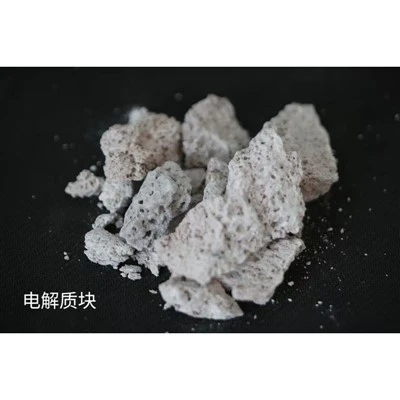
Potassium hexafluoroaluminate, with the chemical formula K₃AlF₆, is a significant inorganic compound widely used in various industries. As a reliable supplier of potassium hexafluoroaluminate, I am well - versed in its properties, especially its physical states at different temperatures. Understanding these physical states is crucial for our customers, as it directly impacts the compound's performance in different applications.
Physical Properties at Room Temperature
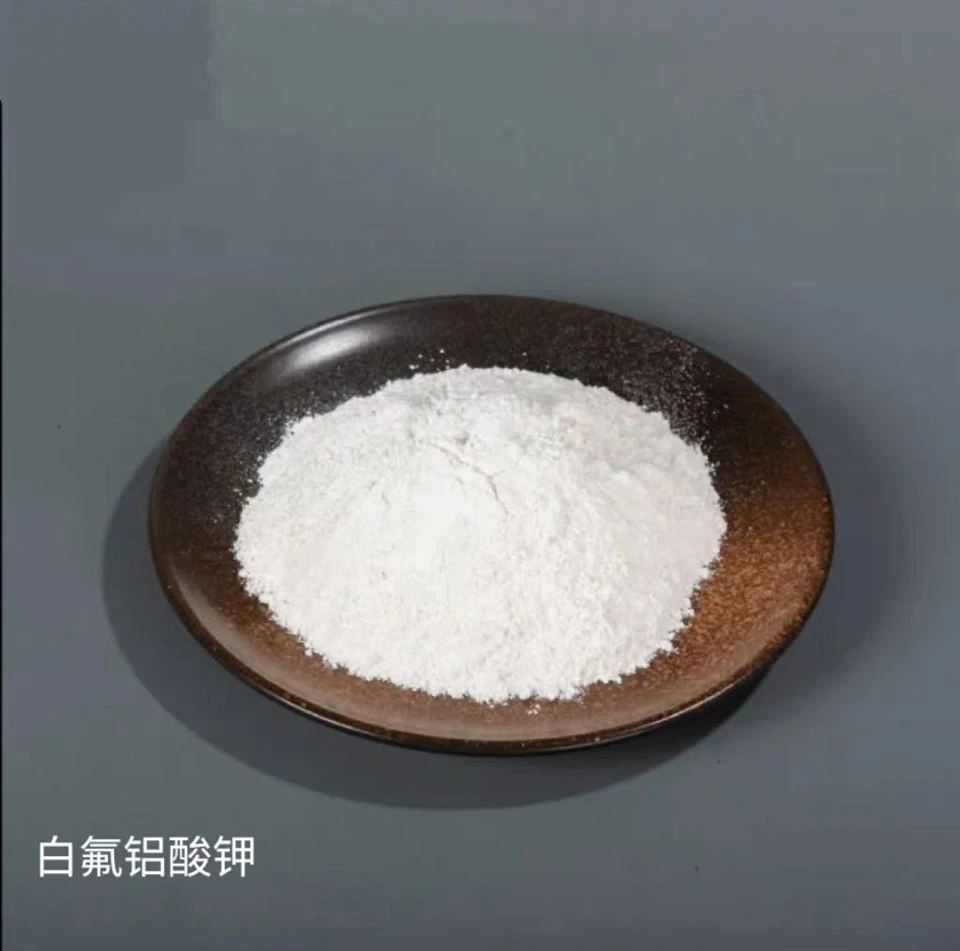
At normal room temperature (around 20 - 25°C), potassium hexafluoroaluminate exists as a white crystalline powder. This form is highly stable under these conditions. The powder has a fine texture, which makes it easy to handle in various industrial processes. Its crystalline structure gives it a characteristic luster under proper lighting, and it is often free - flowing, allowing for convenient storage and transportation.
In room - temperature storage, our potassium hexafluoroaluminate maintains its quality without significant degradation. This stability is one of the reasons why it is so widely used. For example, in the manufacturing of Potassium Cryolite for Vitrified Wheels, the room - temperature stability of the powder ensures that it can be easily mixed with other components during the production process.

Behavior as Temperature Increases
As we start to increase the temperature, potassium hexafluoroaluminate begins to show some changes in its physical state. When heated to temperatures around 560 - 570°C, the compound starts to undergo a phase transition. It begins to soften and gradually transforms from a solid powder into a viscous liquid state.
This phase transition is important in several industries. For instance, in the aluminum smelting industry, potassium hexafluoroaluminate is used as a flux. The conversion to a liquid state at this relatively moderate high temperature allows it to effectively dissolve aluminum oxides on the surface of aluminum, facilitating the smelting process. Our Potassium Aluminum Fluoride (PAF) product, which is based on potassium hexafluoroaluminate, has been carefully formulated to ensure smooth phase transitions at the appropriate temperatures for optimal performance in aluminum smelting.
High - Temperature Behavior
When the temperature is further increased to above 1000°C, potassium hexafluoroaluminate remains in a liquid state but with significantly reduced viscosity. At these high temperatures, the liquid becomes more fluid, which is beneficial in applications where good flowability is required.
In some high - temperature ceramic manufacturing processes, the high - temperature liquid state of potassium hexafluoroaluminate is utilized. It can act as a sintering aid, helping to lower the sintering temperature of ceramics and improve their density and mechanical properties. Our Micronized Potassium Cryolite product, with its fine particle size, can disperse more uniformly in the ceramic matrix during the high - temperature process, enhancing the overall performance of the final ceramic products.
Cooling and Solidification
When the temperature of the liquid potassium hexafluoroaluminate is gradually decreased, it starts to solidify. The solidification process begins around the same temperature range (560 - 570°C) as the melting point during heating. The solid that forms upon cooling is again a crystalline solid, but the crystal structure may be affected by the cooling rate.
A slow cooling rate usually results in larger and more well - formed crystals, while a rapid cooling rate can lead to a more amorphous or fine - grained structure. This property is important in applications where the physical structure of the solid is crucial. For example, in the production of Cryolite Powder, the cooling rate can be adjusted to obtain the desired particle size and crystalline structure, which in turn affects the powder's reactivity and other properties.
Influence of Impurities on Physical States
It's important to note that the presence of impurities can significantly affect the physical states of potassium hexafluoroaluminate at different temperatures. Even small amounts of impurities can lower the melting point and change the phase transition behavior.
As a professional supplier, we take great care to ensure the high purity of our Potassium Hexafluoroaluminate products. Through advanced purification processes, we can minimize the amount of impurities, ensuring consistent and predictable performance in terms of physical state changes at different temperatures.
Applications and the Importance of Temperature - Dependent Physical States
The temperature - dependent physical states of potassium hexafluoroaluminate play a key role in its wide range of applications. In addition to the industries mentioned above, it is also used in the glass industry. In glass manufacturing, the compound's ability to melt at a certain temperature and then solidify can help modify the properties of the glass, such as improving its transparency and reducing its viscosity during the melting process.
In the welding industry, potassium hexafluoroaluminate is used as a fluxing agent. The phase change from solid to liquid at an appropriate temperature allows it to clean the surface of the metal being welded, preventing oxidation and improving the quality of the weld.
Conclusion and Invitation to Contact
In conclusion, the physical states of potassium hexafluoroaluminate at different temperatures are complex and have a profound impact on its applications. Whether you are in the aluminum smelting, ceramic, glass, or welding industry, understanding these properties is essential for achieving optimal results in your production processes.
As a long - term supplier of high - quality potassium hexafluoroaluminate, we are committed to providing you with products that meet the strictest quality standards. Our in - depth knowledge of the compound's temperature - dependent properties allows us to offer customized solutions to suit your specific needs.
If you are interested in learning more about our potassium hexafluoroaluminate products or are looking for a reliable supplier for your business, please do not hesitate to contact us. We are ready to engage in procurement discussions and provide you with detailed product information and competitive quotes.
References
- Perry, R. H., & Green, D. W. (1997). Perry's Chemical Engineers' Handbook. McGraw - Hill.
- Lide, D. R. (Ed.). (2005). CRC Handbook of Chemistry and Physics. CRC Press.