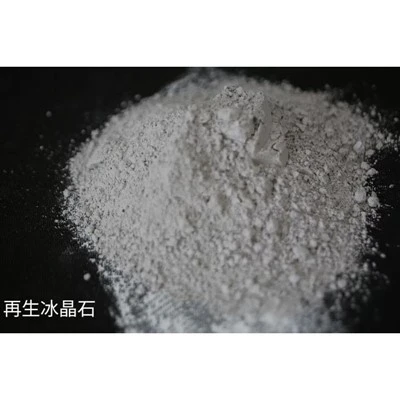
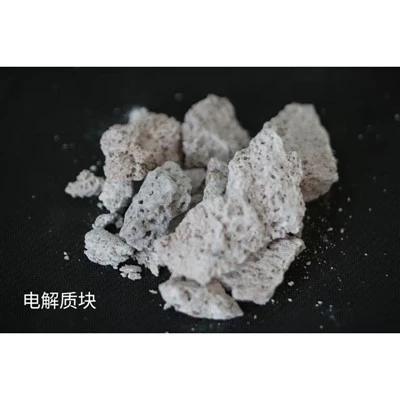
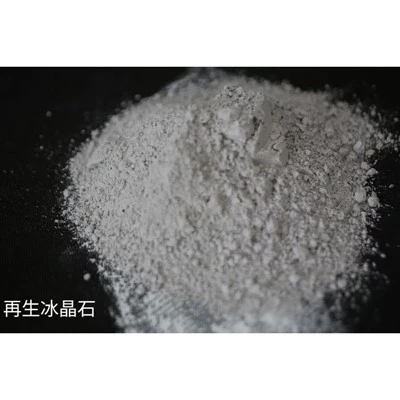
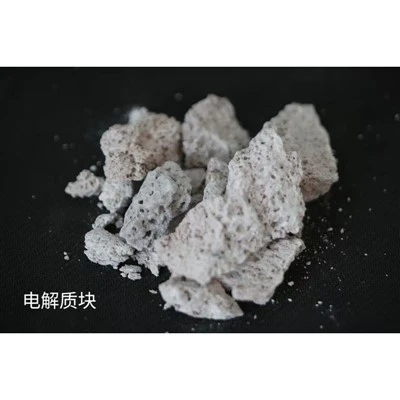
Electrolytic aluminum smelting represents the most critical and largest-scale application for sodium fluoroaluminate, serving as its primary industrial use. Alumina possesses an extremely high melting point, making direct electrolytic production impossible; however, sodium fluoroaluminate acts as a specialized flux that significantly lowers the melting temperature of alumina, enabling the electrolysis reaction to proceed stably at controllable temperatures. In its molten state, it forms a stable electrolyte system that enhances melt conductivity, balances internal temperatures within the electrolytic cell, and effectively reduces electrical energy consumption during the process. Furthermore, it stabilizes operating conditions, minimizes cell fluctuations and waste generation, and ensures the purity of molten aluminum and production continuity, making it an indispensable raw material for the modern electrolytic aluminum industry.
In the ceramics and glass processing industries, sodium fluoroaluminate is widely utilized as a flux and a decolorizing/refining agent. During ceramic glaze production, the addition of appropriate amounts of sodium fluoroaluminate lowers the melting temperature and broadens the firing temperature range; this allows the glaze to spread evenly at high temperatures, effectively preventing firing defects such as pinholes, glaze crawling, and surface roughness, while enhancing the gloss and smoothness of the finished product. In glass manufacturing, it serves as a fining and decolorizing agent, eliminating internal bubbles and impurities and mitigating the greenish tint caused by iron ions; this results in superior light transmission and uniform coloration, thereby effectively improving the overall quality of the finished glass.
Sodium fluoroaluminate also finds extensive application in auxiliary industrial sectors such as metal processing, abrasive manufacturing, and fine chemicals. In metal surface treatment, it acts as an agent for removing rust and impurities, clearing away surface oxides to optimize subsequent processing results. In the production of synthetic abrasives, it improves crystal structure, enhances hardness and sintering stability, and results in superior grinding and polishing performance. Additionally, it serves as a fundamental raw material for various fluoride-based chemical products, enabling the synthesis of diverse composite fluoride salts to meet various fine chemical production needs; overall, it boasts a broad scope of application and exceptional industrial utility.