When selecting sodium fluoroaluminate, the primary principle is matching the purity grade to your specific production conditions; choosing the appropriate grade-special, first, or second-prevents process anomalies caused by grade mismatches. For high-end electrolytic aluminum, specialty glass, and precision ceramics, the "special grade" is mandatory; with an effective sodium fluoroaluminate content of ≥98.5% and minimal iron, silicon, and moisture impurities, it ensures a stable electrolyte system and resists decomposition at high temperatures, thereby guaranteeing consistent, high-precision production. For standard electrolytic aluminum, household ceramics, and ordinary glass processing, "first-grade" industrial products are the preferred choice; they offer balanced performance and cost-effectiveness, meeting the demands of large-scale, standard production. For less demanding applications-such as abrasive modification or low-end auxiliary smelting-"second-grade" products suffice; they meet compliance standards while effectively controlling costs and avoiding the resource waste associated with over-specification.

Secondly, selection should be tailored to physical form and fineness specifications to ensure compatibility with your equipment and production processes. Sodium fluoroaluminate comes in two main forms-powder and granules-and the choice directly impacts feeding efficiency and production loss. Fine powders (100–325 mesh) feature a large specific surface area, rapid melting, and high reactivity, making them ideal for static, precision processes like glaze formulation, glass decolorization, and fine material modification. Granular products offer good flowability, minimal dust generation, low feeding loss, and resistance to clogging, making them suitable for large-scale automated feeding systems in electrolytic aluminum production and continuous high-temperature smelting operations. When purchasing, strictly verify particle size uniformity; avoid products with uneven sizing, hard lumps, or moisture-induced caking to prevent issues such as uneven melting, localized fluxing failure, or unstable furnace reactions.
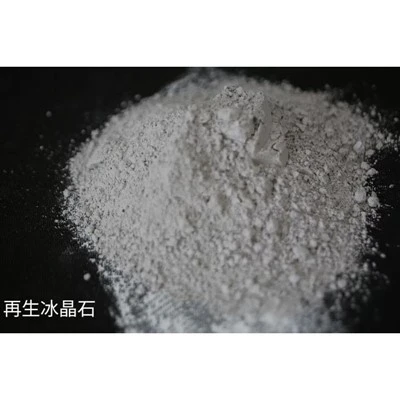
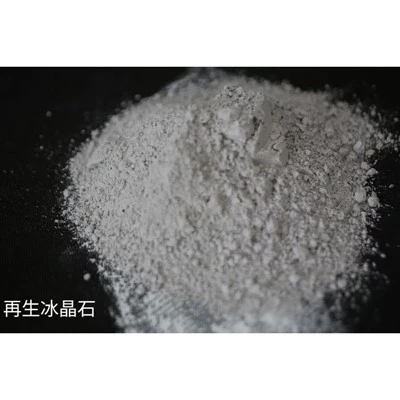
Selecting products based on production process characteristics and operational suitability ensures stability from the very start. Sodium fluoroaluminate produced via the dry process features a regular crystal structure, minimal impurities, excellent high-temperature stability, and low loss on ignition; it is the top choice for high-end electrolytic aluminum production, which requires long-term continuous high-temperature operation and exceptional electrolyte stability. Products manufactured via the wet process offer stable purity, fine particle size, and excellent cost-performance; they are compatible with the vast majority of applications in the ceramics, glass, and general smelting industries, making them the most versatile choice. Recycled sodium fluoroaluminate is inexpensive and performs adequately under basic operating conditions; however, it is suitable only for rough processing scenarios where purity requirements are low and is not recommended for high-precision or continuous production processes. When purchasing, it is essential to verify the product's national standard test report to ensure all specifications comply with GB/T 4291-2017 and to avoid substandard or inferior products.
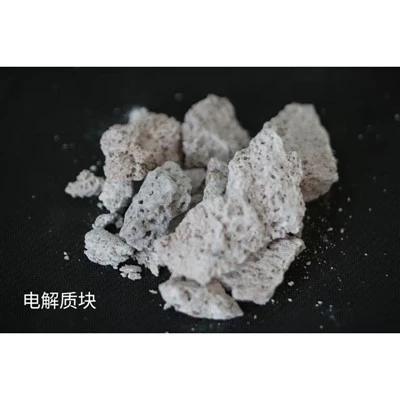
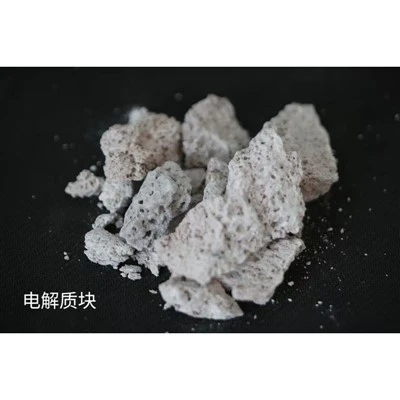
Finally, visual inspection and quality checks regarding storage conditions help screen out products that have deteriorated due to moisture. High-quality sodium fluoroaluminate appears as a uniform, pure white powder or crystalline granules, free from yellowing, blackening, or discolored spots, and shows no signs of moisture-induced clumping or hardening into solid blocks. Issues such as localized caking, dull coloration, or a damp, sticky texture indicate improper storage and moisture absorption; using such material can lead to problems like poor melting, porosity defects, and fluctuations in the electrolytic process. Priority should be given to products with intact, tightly sealed packaging, consistent batch quality, and recent production dates; adhering to a "first-in, first-out" purchasing principle ensures the material's reactivity and performance remain optimal.