Sodium fluoroaluminate, commonly known as cryolite, is an industrial product manufactured in accordance with the national standard GB/T 4291-2007, featuring stable and standardized physicochemical properties. Its standard chemical formula is Na₃AlF₆, with a molecular weight of approximately 209.94; it appears as a white crystalline powder or granule and is odorless and non-corrosive. The material has a standard melting point of around 1025°C, exhibits stability and resistance to decomposition in the molten state, and offers good electrical conductivity and moderate viscosity, making it suitable for continuous high-temperature aluminum electrolysis operations. It is chemically inert at room temperature, resistant to moisture absorption and degradation, slightly soluble in water, and virtually insoluble in organic solvents like ethanol; its parameters remain highly stable during storage and under standard operating conditions.
Chemical composition and purity are critical technical parameters for sodium fluoroaluminate, with quality standards categorized into three grades: Special, First, and Second. High-quality "Special Grade" products contain at least 98.5% active ingredients, with fluorine content ≥53%, aluminum content between 13% and 14%, and sodium content controlled below 31%; total impurities-such as iron oxide and silicon dioxide-are strictly limited to under 0.3%, and moisture content is extremely low. Parameters for First and Second Grade industrial products are slightly more relaxed; while meeting primary composition standards, they allow for marginally higher impurity levels, all of which remain within the limits set by the national standard. The stable elemental ratio and extremely low impurity content effectively ensure process stability in electrolysis, ceramics, and glass processing, preventing production defects caused by impurities.
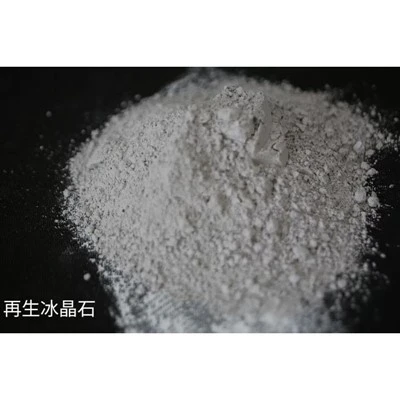
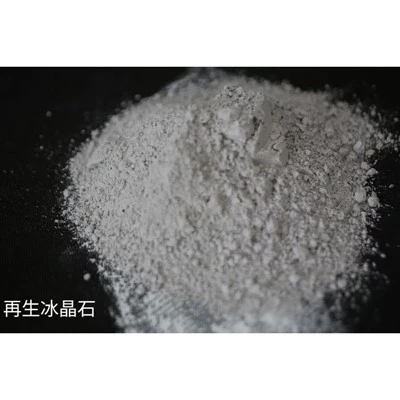
Physical characteristics and application-specific parameters are key factors determining the suitability of sodium fluoroaluminate for industrial production. The product is available in both powder and granular forms; the powder features uniform fineness (typically ranging from 100 to 325 mesh), while the granules have consistent particle sizes and excellent flowability, making them compatible with automated feeding equipment. The material exhibits low loss on ignition and minimal slag formation at high temperatures, avoiding excessive waste accumulation in the furnace. Furthermore, it demonstrates strong compatibility with electrolytic systems; when introduced into aluminum electrolysis processes, it effectively lowers the melting temperature and improves current efficiency, making it ideal for large-scale smelting operations. The system offers broad parameter adaptability, meeting the high-purity requirements of high-end precision processes while also accommodating mass production in standard industrial settings; its versatility and stability fully comply with industrial production standards.